Saturday, November 26, 2016

Posting By Ji Min Kim-W(13,Aging)

#SUMMARY
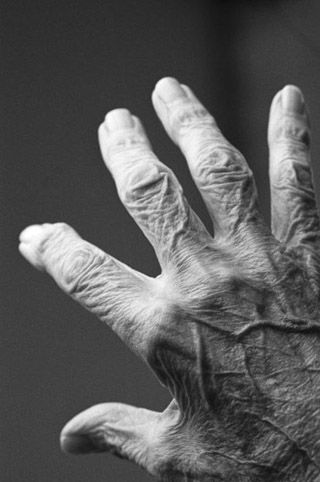
Abuelosmayores.jpg ‎(500 × 375 pixels, file size: 133 KB, MIME type: image/jpeg)
Aging is a biological and complex process.Also, human life is divided into several age groups. Typically, there are infancy, adolescence, adolescence, middle age, and the elderly. Age is different for each country.Activities by age group are related to culture.People are spending on makeup and surgery to prevent aging. On the other hand, young people do well to look older.Teenagers are restricted by law. There are mature teenagers, but they are constrained for legal reasons. These laws vary from country to country.But the elderly are in the realm of physical abuse. Abused elderly people can die faster. There is also self-neglect.Older people have less income. Especially older women are among the low income group.But these women live longer than men. Currently, our society is undergoing an aging society. Especially in developed countries.These elderly people have to develop themselves.

My Thoughts & Questions
Abuse of the elderly is a very important issue. The news also shows that there are many news that old neglected people are dying and news that young people are beating elderly people.
I think young people should have a little more concession and consideration. But I think the elderly should not take it for granted.
Nowadays society is going beyond the aging society and becoming an aging society.
These societies will increase the burden of young people.
I think we should have a law and a job. I would like to ask if there is any solution.

Extra posting by Hwangbo Hyojeong(황보효정)


Q. Is Korea becoming multiethnic?

I think Korea will become a multi-ethnic nation.
As the global era began, the exchange of people around the world became more active and more foreigners came to our country.
Of course, Korea may have difficulty in setting up foreigners because of its exclusiveness to other people.
However, in line with global trends, we expect that such exclusiveness will gradually decrease and people of various ethnic backgrounds will be inhabited in Korea.


KIMJIEUN(김지은) _ W13


#SUMMERY

 
(By Boasson and Eggler St. Petersburg Nevsky 24. [Public domain 또는 Public domain], via Wikimedia Commons)
 
(a) Family
Family is very important factor to us. when having a network of others, we consider our family. Each family's structure is different and various according to their culture. Pet can be also included in family. In family, there is controversy. Is family limited to genetically related individuals? Or not. Family can not be defined because of many variations. Nuclear family is the universal notion that have parents and children. This is tradition. There is substantial variation in family forms around the world, varying from culture to culture. This is polygamy and endogamy. Family's notion have changed so far. In hunter-gatherer groups, cooperation was important factor in family's notion and family was often political or strategic between the two groups represented by the marital partners. In horticultural or agriculture-based societies, with the advent of sedentary societies, marriage became one of the central institutions for forging economic and political relationships. For elite, marriage became a means of developing alliances or amassing wealth. For non-elite, marriage was a pragmatic way of supporting oneself. Family's function is to reproduce society through procreation or socialization. Procreative families utilize marital privileges, rights, and laws. In contrast, the functions of non-procreative families is to facilitate social economic, emotional, and interpersonal support networks, combine resources for the pursuit of financial gain, so on. Family life cycle is courtship, marriage, and divorce. In addition, there is the death of one of the partners terminates the marriage. This link discuss families and inequality about gender, race-ethnicity, religion. In modern, the notion of new families' forms emerged. This is one-parent households, cohabitation, same-sex unions, and childfree.
 

(By OpenStax Anatomy and PhysiologyOpenStax [CC BY 4.0 (http://creativecommons.org/licenses/by/4.0)], via Wikimedia Commons)
 
(b) Aging
Human beings experience and accomplish stages of biological and social maturation through aging. Aging is a complex process of subjective biological and social realities intertwined with relatively objective biological and social standards that shift within and between historical and cultural periods. There is dividing the lifespan. These divisions are somewhat arbitrary, but generally capture periods of life that reflect a certain degree of similarity. Also, culture helps to interpret ages. For example, age is often seen to beget wisdom. The labels of "old" and "young" also vary by life expectancy. In addition, the activities that are expected of one at different ages is also socially constructed and relative to culture. Ageism is prejudice in the grounds of age. There is treatment of the young. Few people seem to realize that young people are often subjected to discrimination because of their age. young people lack the maturity required to make such important decisions. Young people are also stereotyped as being both amusing, but at the same time potentially dangerous and disturbing. In contrast, there is treatment of the elderly. The elderly ranges from behavioral restrictions to the realm of physical abuse. The elderly are often stereotyped. One stereotype of the elderly is that they are inflexible in their attitudes and that they tend to only become more conservative with time. This link discuss the relation between age and other factors. In other factors, there are income, gender, sexuality, and age and race. And in US, the geography of age is quite intriguing. there are concentrations of the elderly in the Midwest and in the South, particularly in Florida. Because the young are moving out of the Midwest as they search for jobs. Besides that, there are global aging trends and aging and health.
 

#MENTION

About this link, there are many interesting part. First, there is the function of families. "Family's function is to reproduce society through procreation or socialization." I empathize much these part. So, family is very important fact in society. Currently, family become disjoint. Society have to realize this seriousness and solve this problem. Second, I am interested in the treatment of the young. When I am teenager, I don't understand why teenagers don't have vote in elections. I think there are more recognitive teenagers than adults. However, now I think this is problem about range. The young people are universally dangerous and disturbing. So, they have to be protected from law.
 

#QUESTION

We define conceptualizations of what it means to be a certain age. In Korea, 10s is students that have to study. 20s have to get a job and work hard. 30s and 40s have to marry and raise their children. Do you think there is the conceptualizations of what it means to be a certain age? If so, please tell me your opinions.

W13 Family - Ahn seo hyeon (안서현)

Family

Family is defined as domestic group of people and it is linked through same ancestor, marriage, adoption, committed relationship. Form of family differs from ancient form. Single-person household has been increased. And family form is different from culture to culture. Also, family forms is attitudes toward endogamy. Family form has changed over time,
There are many theories about family. 1.Function of family : From children's view, family is family of orientation. From adult's view, family is family of procreation. Procreative families utilize marital privileges, rights, laws but all society do not follow this, Non-procreative familiy facilitate social, economic, emotional, interpersonal support network.
Family life cycle is courtship - marriage - children - divorce - death and widowing.
In family, there is inequality based on gender, race and ethnicity, religion. 
And there are new forms of family - one parent household, cohabitation, same-sex unions, childfree.

My think & Question 

I focus on new forms of family especially one parent household. Since 2007, Korea divorce rate has been higher than 110,000. Divorce in two-person households (wife&husband), divorce isn't important. But if they have child, child will have wound in their mind. They will be lonely in empty house and miss one parent. So they need help. How can help them??
(By Javad Alizadeh. Farhikht at 영어 위키백과 (The artist has sent it via email after my request.) [GFDL (http://www.gnu.org/copyleft/fdl.html) 또는 CC-BY-SA-3.0 (http://creativecommons.org/licenses/by-sa/3.0/)], via Wikimedia Commons)


Posting by Hwangbo Hyojeong(황보효정)_W13

1. Family

https://upload.wikimedia.org/wikipedia/commons/f/fa/TSgt_Pattee_meets_daughter.jpg


Summary:
In general, we call it a 'family' when a common ancestor, marriage, adoption, or some other committed (romantic or otherwise) relationship exists.
But as society changes, the need to define more diverse forms of families is required.
Families have various forms and functions.
There are family members that are slightly different from common family types, such as homosexuals, bisexual couples, people living with several animals, and groups sharing their residence.
There are various forms of married couples in the world, including polygamy, women with one or more husbands, married couples with one husband and one wife. Thus, cultural diversity exists in the form of family.
The structure of the family changed over time.
In the hunter-gathering society, political and strategic marriages were made, and marriage was not significant.
Horticulture and farming society have begun to make a big difference in the meaning of marriage and family style.
For nobles, marriage was also used as a tool for forming an alliance, and non-elites married to collect resources and make life better.
In ancient Rome, the father's power was absolute.
The father even had the right to kill the family.
The Western modern family is based on Christian thought.
The family has many functions.
In the case of a childbirth family, it has a function to reproduce society.
Married couples play a role in socializing their children.
Non-procreative families have a variety of functions, such as networking, monetary gain, and allotting emotional needs.
In most countries, marriage between brothers and sisters is prohibited.
In ancient Egypt and other countries, however, the royal family allowed marriage between brothers and sisters, to concentrate their power in one place.
The Family Life Cycle includes Courtship, marriage, Children and Divorce.
Courtship is the time for a couple to date before marriage. The length and form of courtship varies.
Marriage is a socially recognized sexual and intimate interpersonal relationship.
Through marriage, marriage is established and announced to the surrounding people.
A happy marriage can also help your health.
If you raise a lot of children, the social status is lowered on average because the cost of nurturing is high.
The divorce rate in America is quite high.
Divorce occurs due to psychological and financial conditions.
If one of the married couples dies, they may live alone or remarry after that.
Satisfaction of marriage, and economic status after marriage are different according to gender.
Race can act as discriminatory factor when marrying.
Religion can also change the style of marriage.
The number of One-Parent Households is increasing.
It is a phenomenon that occurs when negative perceptions of one-parent households are reduced and their rights are increased.
Cohabitation is a couple who is not legally recognized but who lives in the same place.
In certain regions, same-sex marriage is legalized.
Some families have no children according to infertility or values.


Opinion:
Through this material, I became acquainted with various family forms.
It was interesting that the shape of marriage had changed over time.
In the process of getting married and packing up the family, I could feel the financial and psychological considerations are very diverse.


Question:
1. In some countries there is polygamy. What do you think about this type of family?
2. Do you think same-sex marriage should be legalized in Korea?


2. Aging

https://upload.wikimedia.org/wikipedia/commons/e/ec/Altenpflege_02.jpg


Summary:
Aging is a biological and sociological phenomenon.
Social age and subjective age may not coincide.
Aging is a complex concept that is both objective and subjective.
Human life is divided into Infancy, Toddler, Childhood, Adolescence, Young adult, Prime adulthood, Middle age and Old age.
Adults in most countries start at the age of 18.
There are places that recognize aging positively and some that recognize it as negative.
According to life expectancy, the criteria for classifying young and old are different.
Age discrimination exists.
Young people are also neglected in terms of lack of maturity.
The elderly are threatened with health or abused.
In the Social Security system, old-age pensions are paid to seniors who are not able to work or retire.
Older women are more likely to suffer poverty than men.
Women have a higher life expectancy than men.
The black elderly are more likely to be mentally and physically abused than the white elderly.
In the United States, elderly people are concentrated in specific areas.
Life expectancy is increasing worldwide.
Positive attitudes help older people to stay healthy.


Opinion:
I learned a lot about aging through this material.
I think that it is important to know about the process because everybody gets older one day.
I learned that abuse of the elderly was occurring a lot and thought that it should be done away with.
Also, I thought that I should do a lot of effort to send good old age.


Question:
What efforts should we make to ensure that young people and older people are not discriminated against by age?

Family and Age (Week 13) - Conan Chua

1. Summary

A family is usually defined as a domestic group of people or a number of domestic groups linked through common ancestors, marriage, adoption or other forms of committed relationships. This encompasses people who do not have blood (genetic) relations but still consider each other a part of the family. The traditional view of a family, comprised of a man, woman and their children, is called a nuclear family and is a social invention, thus it may not reflect the reality of family for everyone.

A family’s form and function can have various cultural variations, where some may even have multiple spouses or relationships (polygamy or polyamory). Another variation is having relationships within a social group, known as Endogamy. This form of family functions to encourage greater group solidarity and control over resources, used mainly by displaced cultures attempting to make new roots in new countries.

All in all, a family functions to procreate (as parents), and orientate the children into society. This type of family is known more accurately as procreative families. The other form of family is non-procreative, which are built to facilitate social, economic, emotional and interpersonal support networks.

The life cycle of a family begins with courtship, where people involved in the relationship get to know each other better. Progression of courtship leads to engagement and then marriage. Marriage is a governmentally, socially or religiously recognized interpersonal relationship, usually in the form of a contract. After marriage, the relationship usually leads to procreation of children. If the marriage is unsuccessful, then divorce occurs where the relationship breaks down.

Inequality within a family may come in the form of gender inequality. Heterosexual marriages do increase the socioeconomic status of women, but men seem to reap more benefits from the arrangement. When the women manage the household, the men usually retain control over the money. This leads to women being on the losing end in a divorce. However, marriage is shifting towards being more egalitarian due to education.

New developments of families that differ from the usual heterosexual relationship (nuclear family) come in the form of a change in the type of relationship between the partners. There are one-parent households, cohabitation (intimate relationship in a common living place without contract) and same-sex unions. Some married couples also decide not to have children, either willingly or out of infertility.

With the progression of a relationship, there is also progression of age. As people go through the biological process of growing older, they are subject to different interpretations of the social world around them. The human age spans are divided into Infancy, Toddler, Childhood, Adolescence, Young Adult, Prime Adulthood, Middle Age, and finally Old Age.
Ageism is prejudice based on one’s age. The two most targeted groups are the young and the elderly. Young people usually have limitations put on them by their parents or the government regarding their involvement in the society. This can be in the form of curfews, voting rights, alcohol or cigarette consumption just to name a few. The main reason for this limitation is the idea that young people lack the maturity needed to make such important decisions. Elderly people on the other hand are subjected to behavioral restrictions or even physical abuse. These elderly people unfortunately suffer from a higher risk of premature death. Generally, elderly people are also stereotyped as being inflexible and conservative, which has been proven false as they actually seem to get more adept, open-minded and tolerant with age.

Gender also plays a part in the aging process. Men usually have shorter lifespans than women, of which many think is due to the riskier lives of men. However, this gap in lifespan is shrinking as gender equality increases, with women seeking more jobs and men being more willing to seek proper healthcare.

A global trend in age is increasing life expectancy, except for a few outliers with decreasing expediencies, usually due to AIDS.

2. Something of interest to me

I think that families that are defined as procreative or non-procreative may still change as the people involved age, and their view of the world or even their goals in life change along with them. A non-procreative family may think that children do not play an important role at a certain point in time, but those thoughts could change and the family becomes procreative. This could also happen in the opposite way, however unfortunate that might be. Do parents with children that become independent change from being in a procreative relationship to a non-procreative one?

3. Discussion point


Prevalent gender inequalities in society play a role in how the family fits into society. In the traditional nuclear family, there is usually one breadwinner and one partner taking care of the family. In the case of a same-sex marriage on the other hand, the presence of two men usually mean two sources of income. The impact of their marriage on society will be different from that of a traditional family. How might other forms of marriage (polygamy, endogamy, etc.) affect the society they are part of differently?

Extra postings _ Ahn seo hyeon(안서현)

# Is Korea becoming multiethnic?

Yes, Korea has been homogeneous since Joseon era.
But through industrialization, foreign workers came Korea.
So multicultural families emerged, and now there are 30,000 mixed race children.

# Are we prejudiced?

Yes, people living in foreign countries say they experience prejudice.
Foreign people sometimes tear their eyes expressing Asian's long, single-lids eyes.

# What other gendered cultural symbol can we think of?

At holiday, females go male's house and work with other females.
Today, people go both female's house and male's house.
But, male's house has priority.
If there's short time, they go male's house.